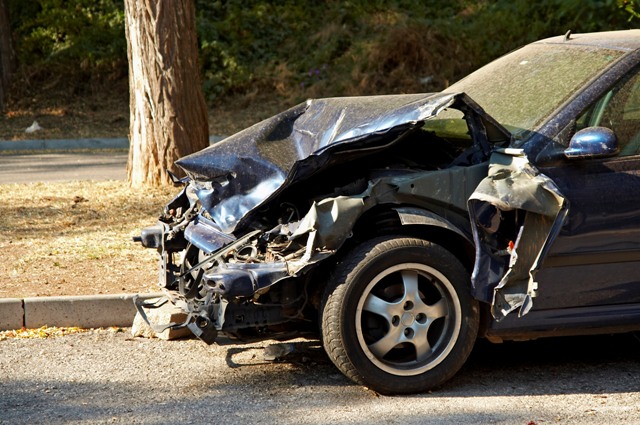
Maui has a large amount of traffic on its roads. In addition to residents of our island, there are about three million visitors to Maui each year. A significant number of those visitors rent vehicles to see the scenic beauty of the island making Maui is one of the busiest car rental ports in the nation. Despite the recent airport expansion enabling rental car companies to park vehicles closer to airport terminals, the Maui rental market has already outgrown the expansion. Rental companies park thousands of vehicles on vacant lots close to the airport and shuttle vehicles to the lot as necessary.
Drivers distracted by other passengers, the ocean views or cell phones can cause accidents and despite the beautiful vistas, Maui's roads require the full attention of drivers. The Hana Highway is narrow in places and, even though the road is maintained often, the forces of nature make the job a never-ending task. Traffic is almost always heavy on the road to Lahaina and Kaanapali.
Just this week, a motorcycle went over a guardrail on the Honoapiilani Highway, there was a fatal vehicle accident in Kahului and a landslide near Kipahulu. These accidents demonstrate the need for full attention. Already, the fatality rate for vehicle accidents on Maui is significantly higher this year than last. (33% higher.)
Please remember to drive safely and take your time.
If you or a loved one have been in an accident, call our office for a free consultation. We may be able to help you recover compensation for negligence, a wrongful death situation or other personal injury.
Showing posts with label Car Accident. Show all posts
Monday, September 16, 2019
Friday, March 13, 2015
County of Maui and State of Hawaii Liability
Civil liability of a governmental entity such as the County of Maui can be a complicated issue. Governmental entities often attempt to limit their own liability by enacting legislation stating specifically saying they are not liable for certain categories of decisions. Common exclusions are limited liability for planning decisions and discretionary functions. An example of this in action is the Hawaii Revised Statute, HRS §662-19 which excludes public entities and employees from liability for injuries to someone using a public skateboard park.
Even though there can be exclusions for recovery from a governmental entity or a county, governmental bodies can still be liable for injuries. State and County liability is often modeled after the Federal Tort Claims Act which allows recovery against the government for personal injury, wrongful death and property damage caused by negligence of a government employee.
This theory applies to the State of Hawaii and County of Maui also. There have been successful lawsuits and settlements obtained from the County and State due to negligence. Not all lawsuits against the County or State are successful. However, many different suits have been filed.
Even though there can be exclusions for recovery from a governmental entity or a county, governmental bodies can still be liable for injuries. State and County liability is often modeled after the Federal Tort Claims Act which allows recovery against the government for personal injury, wrongful death and property damage caused by negligence of a government employee.
This theory applies to the State of Hawaii and County of Maui also. There have been successful lawsuits and settlements obtained from the County and State due to negligence. Not all lawsuits against the County or State are successful. However, many different suits have been filed.
- In 2010 a woman sued the Maui Police Department for extortion and theft.
- In 2012, a golfer at the Waiehu Golf Course sued Maui County for negligence after he was attacked and injured by a goose on the greens.
- Recent lawsuits have also claimed County negligence in not properly maintaining roads which can cause vehicle accidents.
Monday, December 8, 2014
Compensatory and Punitive Damages in a Personal Injury Case
If you have been in an accident, you may be able to receive compensation for your damages from the person who caused you harm. There are two types of damages you may be able to collect in a personal injury case: compensatory and punitive.
Compensatory Damages
-Damages designed to compensate you for your specific injury and loss.
1. Economic Damages
-Also known as Special Damages in a personal injury case.
-Tangible damages whose dollar amount can be concretely measured.
-Medical expenses, damage to motor vehicle, property damage,
loss of earnings, etc.
2. Non-Economic Damages
-Also known as General Damages in a personal injury case.
-Intangible damages that can not be quantified.
-Pain and suffering, emotional harm, disfigurement, loss of companionship,
loss of consortium, etc.
Punitive Damages
-Damages designed to punish the person responsible for your injury and loss.
-Used to deter future conduct of both the person responsible and others.
-Usually limited in Hawaii to nine or ten times the amount of actual damages.
You should be aware that references to damages may change depending on the type of lawsuit you have. For example, compensatory damages in a tort case may have a different definition than in a contract case. To determine the type and amount of damages that you are entitled to for your accident, seek the advice of a personal injury lawyer.
Compensatory Damages
-Damages designed to compensate you for your specific injury and loss.
1. Economic Damages
-Also known as Special Damages in a personal injury case.
-Tangible damages whose dollar amount can be concretely measured.
-Medical expenses, damage to motor vehicle, property damage,
loss of earnings, etc.
2. Non-Economic Damages
-Also known as General Damages in a personal injury case.
-Intangible damages that can not be quantified.
-Pain and suffering, emotional harm, disfigurement, loss of companionship,
loss of consortium, etc.
Punitive Damages
-Damages designed to punish the person responsible for your injury and loss.
-Used to deter future conduct of both the person responsible and others.
-Usually limited in Hawaii to nine or ten times the amount of actual damages.
You should be aware that references to damages may change depending on the type of lawsuit you have. For example, compensatory damages in a tort case may have a different definition than in a contract case. To determine the type and amount of damages that you are entitled to for your accident, seek the advice of a personal injury lawyer.
Wednesday, November 12, 2014
Access to Jaws Surf Break at Peahi
Every winter the North Pacific ocean brews large storms that create huge swells. Many of the swells eventually reach Maui's north shore and the underwater topography in certain places along the coast create huge waves. The biggest waves typically occur near Peahi which is also known as Jaws.
For decades, Jaws was a place only locals familiar with big wave surfing knew how to access. However, Peahi's popularity has increased significantly and every year when the wave "fires off," the parking lot is overflowing with dozens of cars and scores of people.
Despite the number of people, you should be aware that there is no public access to Jaws. The road through the jungle to the most popular viewing area is privately owned by Alexander and Baldwin. The company has generally been a very generous neighbor by not making too many attempts to shut off access to the unmaintained dirt road. The company recently even cooperated with Red Bull and the County of Maui with plans to organize a big-wave surfing contest.
If you visit Peahi to watch big-wave surfing, please be careful and be considerate. The drive from the Hana Highway to the viewing area can easily take an hour due to traffic on the one-lane road that is packed with trucks, motorcycles, dogs and tourists.
Remember that, as with many places on Maui, you are a guest on privately owned land. Car accidents and injuries are not uncommon due to poor driving conditions and large numbers of people. Also, if you park irresponsibly along the Hana Highway, you should expect a parking ticket. Maui Police Department does patrol the area.
Photo of Jaws by Maui Legal Team Investigator
For decades, Jaws was a place only locals familiar with big wave surfing knew how to access. However, Peahi's popularity has increased significantly and every year when the wave "fires off," the parking lot is overflowing with dozens of cars and scores of people.
Despite the number of people, you should be aware that there is no public access to Jaws. The road through the jungle to the most popular viewing area is privately owned by Alexander and Baldwin. The company has generally been a very generous neighbor by not making too many attempts to shut off access to the unmaintained dirt road. The company recently even cooperated with Red Bull and the County of Maui with plans to organize a big-wave surfing contest.
If you visit Peahi to watch big-wave surfing, please be careful and be considerate. The drive from the Hana Highway to the viewing area can easily take an hour due to traffic on the one-lane road that is packed with trucks, motorcycles, dogs and tourists.
Remember that, as with many places on Maui, you are a guest on privately owned land. Car accidents and injuries are not uncommon due to poor driving conditions and large numbers of people. Also, if you park irresponsibly along the Hana Highway, you should expect a parking ticket. Maui Police Department does patrol the area.
Photo of Jaws by Maui Legal Team Investigator
Labels:
Car Accident,
Peahi,
Personal Injury,
Real Estate,
Surfing
Location:
Maui, Hawaii, USA
Wednesday, October 8, 2014
Puntive Damages in Hawaii
The goal of a personal injury lawsuit is to compensate you for the loss you experienced because of another person's negligence. After a trial or a settlement, you should be reimbursed for your medical expenses, lost wages and other economic costs that you incurred from your injury.
Compensation for your non-economic damages such as the pain you experienced from the injury, the suffering you had to endure and the loss of companionship your spouse suffered while you were injured are more difficult to quantify. The calculation of how much you are entitled to receive will vary with each individual.
Economic and non-economic damages are called compensatory damages because they are designed to compensate you for your losses. It is possible, but not guaranteed, that you will receive punitive damages which are designed to punish a defendant in severe cases.
If the person who injured you was not just negligent but acted maliciously or oppressively you may be able to receive punitive damages. A jury can consider the economic ability of the defendant and specifically how they acted when injuring you. In Hawaii, a jury can award punitive damages to a plaintiff but the award amount can not be unconstitutionally high. As a general rule, punitive damages should not be more than nine times compensatory damages.
Compensation for your non-economic damages such as the pain you experienced from the injury, the suffering you had to endure and the loss of companionship your spouse suffered while you were injured are more difficult to quantify. The calculation of how much you are entitled to receive will vary with each individual.
Economic and non-economic damages are called compensatory damages because they are designed to compensate you for your losses. It is possible, but not guaranteed, that you will receive punitive damages which are designed to punish a defendant in severe cases.
If the person who injured you was not just negligent but acted maliciously or oppressively you may be able to receive punitive damages. A jury can consider the economic ability of the defendant and specifically how they acted when injuring you. In Hawaii, a jury can award punitive damages to a plaintiff but the award amount can not be unconstitutionally high. As a general rule, punitive damages should not be more than nine times compensatory damages.
Friday, July 11, 2014
Wrongful Death Lawsuit in Hawaii
Sometimes the negligence of another person can cause the death of a loved one. This terrible circumstance often brings large medical bills and costs related the death. Family members are left in the difficult situation of coping with the loss of a loved one and also with paying related costs.
A wrongful death lawsuit can often be brought by certain family members against the person responsible for the death. Hawaii law provides for a civil lawsuit to recover the loss you may have experienced from the death of your loved one. You may be able to recover for medical expenses, funeral expenses, loss of income, loss of companionship and pain and suffering the deceased person suffered before dying.
Every situation is different and the amount recoverable depends on many factors. Also remember that there is usually a two year time limit within which to file a personal injury wrongful death lawsuit in Hawaii. Talk to a personal injury lawyer today to evaluate your case.
Hawaii Revised Statute §663-3 is the statute that allows wrongful death lawsuits. HRS 663-3
Labels:
Car Accident,
Civil Litigation,
Tort,
Wrongful Death
Location:
Makawao, HI 96768, USA
Tuesday, May 20, 2014
General Motors Expands Vehicle Recall
General Motors almost doubled the number of vehicles subject to recall this week bringing the total to 5 million. The latest recall is divided into four different actions and involve issues with seat belts, a shifting cable, a fuse box and air bag.
Although none of latest problems are linked to fatalities, GM could still be subject to possible personal injury lawsuits as product liability claims.
GM has taken intense criticism because of the manner in which it handled the first recall in 2013. Federal safety regulators claimed that GM was slow to initiate a recall. GM and the National Highway Traffic Safety Administration reached a settlement last week that provides for a $35 million penalty.
Although none of latest problems are linked to fatalities, GM could still be subject to possible personal injury lawsuits as product liability claims.
GM has taken intense criticism because of the manner in which it handled the first recall in 2013. Federal safety regulators claimed that GM was slow to initiate a recall. GM and the National Highway Traffic Safety Administration reached a settlement last week that provides for a $35 million penalty.
Tuesday, May 6, 2014
3 Considerations for a Winning Personal Injury Lawsuit
If someone has accidentally or intentionally injured you or a family member you may have a personal injury claim. You should always have your situation evaluated by a personal injury lawyer. However, there are three main factors to consider before filing a lawsuit:
1. Do you have a valid lawsuit?
Personal injury lawsuits are legally referred to as tort claims. A tort is a civil wrong that causes you loss or injury. Injury can occur in a variety of ways and usually involves physical injury to yourself. In certain circumstances, you may also be able to sue for mental trauma or injury to a family member. There is rarely a valid claim for loss or injury to a pet or animal companion.
2. Who is at fault?
Your injury must have been caused by someone else. If the injury was your fault, you cannot force someone else to pay for your damages. You may still have a case if it is unclear who caused your injury or if you are responsible for only part of the damages.
3. Is your judgment collectible?
Even if your situation meets all the requirements for a winning lawsuit, you must consider whether you will be able to collect compensation. Initiating a lawsuit and obtaining a judgment will be of no use if the person who caused the accident does not have any money or assets. If the defendant has nothing to collect and no insurance, a lawsuit could be a waste of time and effort.
Here are some examples of common personal injury lawsuits:
- Injuries incurred from car accidents caused by drunk drivers, distracted drivers texting or talking on cell phones or simply drivers who are negligently not paying attention.
- Defective product lawsuits such as defective vehicles, tires, appliances or other products. A product may have been made defectively such as an ignition key that fails to shut the car off or a product that is designed incorrectly such as a swimming pool filtration system that traps a swimmer at the bottom of the pool.
- Wrongful death lawsuits from airplane crashes, boating accidents or train crashes.
- Injuries from dog bites. Pet owners are often liable for injuries caused by their animals.
- Lawsuits against drug companies who market and sell dangerous pharmaceutical products.
1. Do you have a valid lawsuit?
Personal injury lawsuits are legally referred to as tort claims. A tort is a civil wrong that causes you loss or injury. Injury can occur in a variety of ways and usually involves physical injury to yourself. In certain circumstances, you may also be able to sue for mental trauma or injury to a family member. There is rarely a valid claim for loss or injury to a pet or animal companion.
2. Who is at fault?
Your injury must have been caused by someone else. If the injury was your fault, you cannot force someone else to pay for your damages. You may still have a case if it is unclear who caused your injury or if you are responsible for only part of the damages.
3. Is your judgment collectible?
Even if your situation meets all the requirements for a winning lawsuit, you must consider whether you will be able to collect compensation. Initiating a lawsuit and obtaining a judgment will be of no use if the person who caused the accident does not have any money or assets. If the defendant has nothing to collect and no insurance, a lawsuit could be a waste of time and effort.
Here are some examples of common personal injury lawsuits:
- Injuries incurred from car accidents caused by drunk drivers, distracted drivers texting or talking on cell phones or simply drivers who are negligently not paying attention.
- Defective product lawsuits such as defective vehicles, tires, appliances or other products. A product may have been made defectively such as an ignition key that fails to shut the car off or a product that is designed incorrectly such as a swimming pool filtration system that traps a swimmer at the bottom of the pool.
- Wrongful death lawsuits from airplane crashes, boating accidents or train crashes.
- Injuries from dog bites. Pet owners are often liable for injuries caused by their animals.
- Lawsuits against drug companies who market and sell dangerous pharmaceutical products.
Labels:
Car Accident,
Civil Litigation,
Dog Bite,
Negligent Infliction of Emotional Distress,
NIED,
No-Fault Insurance,
Personal Injury,
Product Liability,
Tort,
Traffic Accident
Location:
Makawao, HI 96768, USA
Wednesday, April 2, 2014
General Motors and Personal Injury Lawsuits
The CEO of General Motors, Mary Barra, has been testifying before a House Subcommittee regarding GM's ignition switch recall. Members of Congress are interested to find out why it took GM so long to initiate a recall of affected vehicles.
The years of the vehicles in question were initially designated as 2005 to 2007. However, GM later expanded the recall to include a much wider range of vehicles, models and years. In certain circumstances, including a roll-over accident, the key may turn the vehicle ignition out of the "run" position. In this instance, the air bags of the car may not deploy causing personal injury or death.
Although vehicle recalls occur frequently, this particular recall is interesting because of GM's delayed reaction time when identifying the issue and reporting it to the federal government. Also, GM emerged from bankruptcy in July of 2009. GM is legally immune to product liability lawsuits before this time.
GM is now under pressure from Congress to pay for many of the claims it may hold immunity to. Underlying immunity is also being challenged in a number of personal injury lawsuits. Also, the Justice Department is investigating whether GM committed bankruptcy fraud by not disclosing the vehicle defects when it went through bankruptcy.
For more information take a look at the U.S. House of Representatives Energy and Commerce Committee website. U.S. House of Representatives Energy and Commerce Committee
The years of the vehicles in question were initially designated as 2005 to 2007. However, GM later expanded the recall to include a much wider range of vehicles, models and years. In certain circumstances, including a roll-over accident, the key may turn the vehicle ignition out of the "run" position. In this instance, the air bags of the car may not deploy causing personal injury or death.
Although vehicle recalls occur frequently, this particular recall is interesting because of GM's delayed reaction time when identifying the issue and reporting it to the federal government. Also, GM emerged from bankruptcy in July of 2009. GM is legally immune to product liability lawsuits before this time.
GM is now under pressure from Congress to pay for many of the claims it may hold immunity to. Underlying immunity is also being challenged in a number of personal injury lawsuits. Also, the Justice Department is investigating whether GM committed bankruptcy fraud by not disclosing the vehicle defects when it went through bankruptcy.
For more information take a look at the U.S. House of Representatives Energy and Commerce Committee website. U.S. House of Representatives Energy and Commerce Committee
Friday, February 28, 2014
Personal Injury Claims
Personal injury claims in Hawaii encompass a tremendous variety of incidents including boating and pool accidents, slip and fall injuries, negligence involving dog attacks and car accidents.
Even though injuries vary widely, methods to preserve your personal injury claim are similar no matter how your accident occurred. The following steps will help ensure that you are compensated for your losses and medical expenses.
The first step, and your highest priority after an accident, is to obtain medical treatment. See a doctor if you have not already and thoroughly explain your injury. Follow through with treatment and be sure you medically stable before you proceed with step two.
Gathering information is the second step. Take pictures, collect contact information from witnesses and talk to other people involved in the accident including rescuers and onlookers. Save all medical information as well, including bills and copies of prescriptions. Keep a journal through your treatment to make sure you remember everything.
The third step is to make an appointment with a personal injury lawyer in your area to preserve your legal rights. With every personal injury claim there is a time limit to file a lawsuit. Do not wait until the time limit has almost expired. See an attorney as soon as possible to help investigate your case, evaluate how much your case is worth and to write a demand letter to the person or company responsible.
Even though injuries vary widely, methods to preserve your personal injury claim are similar no matter how your accident occurred. The following steps will help ensure that you are compensated for your losses and medical expenses.
The first step, and your highest priority after an accident, is to obtain medical treatment. See a doctor if you have not already and thoroughly explain your injury. Follow through with treatment and be sure you medically stable before you proceed with step two.
Gathering information is the second step. Take pictures, collect contact information from witnesses and talk to other people involved in the accident including rescuers and onlookers. Save all medical information as well, including bills and copies of prescriptions. Keep a journal through your treatment to make sure you remember everything.
The third step is to make an appointment with a personal injury lawyer in your area to preserve your legal rights. With every personal injury claim there is a time limit to file a lawsuit. Do not wait until the time limit has almost expired. See an attorney as soon as possible to help investigate your case, evaluate how much your case is worth and to write a demand letter to the person or company responsible.
Labels:
Car Accident,
Civil Litigation,
Dog Bite,
Negligent Infliction of Emotional Distress,
NIED,
No-Fault Insurance,
Personal Injury,
Tort,
Traffic Accident
Location:
Makawao, HI, USA
Wednesday, February 26, 2014
Whiplash Injuries in Car Accidents - Personal Injury
The modern term for a whiplash injury is cervical acceleration-deceleration (CAD). It may also be described as a cervical strain or hyperextension injury. This type of injury is typically seen as the result of a rear collision and is the most commonly diagnosed injury after a car accident.
A CAD results from the sudden acceleration and deceleration of the head and neck immediately after impact. The injury may occur to both the soft tissue of the neck and also the spine. CAD injuries are common but are sometimes overlooked or mistreated because of a misunderstanding of the injury.
Common symptoms of a CAD injury include headache, dizziness, jaw pain, arm pain, ringing ears, back pain, shoulder pain and fatigue. It is important to seek medical treatment as soon as possible after an accident to ensure that you receive a proper diagnosis and treatment.
Describe your symptoms and give your doctor a detailed account of your accident including the motion of your head and neck. A doctor may take x-rays of your neck and prescribe a cervical collar to prevent further injury. You may also receive physical therapy and instructions for gentle motion exercises to support the healing process.
If you have been injured in a car accident and believe you have a CAD injury, see your doctor today. Call a personal injury lawyer soon after to make sure that you are compensated for your injuries.
A CAD results from the sudden acceleration and deceleration of the head and neck immediately after impact. The injury may occur to both the soft tissue of the neck and also the spine. CAD injuries are common but are sometimes overlooked or mistreated because of a misunderstanding of the injury.
Common symptoms of a CAD injury include headache, dizziness, jaw pain, arm pain, ringing ears, back pain, shoulder pain and fatigue. It is important to seek medical treatment as soon as possible after an accident to ensure that you receive a proper diagnosis and treatment.
Describe your symptoms and give your doctor a detailed account of your accident including the motion of your head and neck. A doctor may take x-rays of your neck and prescribe a cervical collar to prevent further injury. You may also receive physical therapy and instructions for gentle motion exercises to support the healing process.
If you have been injured in a car accident and believe you have a CAD injury, see your doctor today. Call a personal injury lawyer soon after to make sure that you are compensated for your injuries.
Labels:
Car Accident,
Personal Injury,
Tort,
Traffic Accident
Location:
Makawao, HI, USA
Tuesday, February 25, 2014
Personal Injury - Traffic Accidents on Maui
Historically, national statistics on traffic accidents have shown a decline in fatalities over the last several years. The national rate averages to 12.07 fatalities per 100,000 people according to the National Highway Traffic Safety Administration (NHTSA). National Traffic Statistics
Maui County's traffic fatality rate is slightly higher than the national average at 12.9 according to NHTSA records. Maui County Traffic Statistics
Available traffic fatality statistics for Maui include many categories. The following chart visually demonstrates one category: single vehicle crash fatalities in Maui County. The five years shown on the chart average to 12.8 fatalities per 100,000 people. Complete information for 2013 is not yet available but preliminary data indicate that traffic fatalities may have declined in 2013.
If you or your family have experienced a loss due to a traffic accident, call our office today for a free consultation to see if we can help you recover compensation.
Maui County's traffic fatality rate is slightly higher than the national average at 12.9 according to NHTSA records. Maui County Traffic Statistics
Available traffic fatality statistics for Maui include many categories. The following chart visually demonstrates one category: single vehicle crash fatalities in Maui County. The five years shown on the chart average to 12.8 fatalities per 100,000 people. Complete information for 2013 is not yet available but preliminary data indicate that traffic fatalities may have declined in 2013.
Wednesday, February 19, 2014
Negotiating a Personal Injury Case
Negotiating a settlement in a personal injury lawsuit can be extremely complex. Just as you would not try to perform complex surgery on yourself, you should also not try to negotiate your own personal injury case. Always consult an experienced personal injury attorney to make sure you have considered all of your legal options.
The following factors are just a few of the many considerations when negotiating a personal injury settlement.
1. Case Evaluation
How much is your case worth? A good case evaluation will take into consideration your medical expenses, any permanent injury, your age, ongoing medical treatment and property damage. You must determine a range of value for your case before you begin negotiating. If you have not decided on a value, an insurance company will be happy to tell you how much your case is worth. This value is likely to be much less than what you should actually receive.
2. Timing
Settling a personal injury claim too quickly can result in lost damages. Your attorney must adequately investigate the possibility of lost earnings and employment, properly evaluate any injury to determine if it is permanent or temporary and make sure you are "medically stationary" before sending a demand letter to an insurance company. A proper investigation must be completed before settling your case.
3. Statute of Limitations
Every personal injury claim has a statute of limitations. This is the period of time after an injury occurs within which you must file a lawsuit or you will be prohibited from recovery. Contact an attorney soon after you have been injured to begin an investigation, make sure you are receiving proper medical care and to preserve your rights.
4. Demand Letter
Drafting an demand letter is an art. An effective letter will include relevant facts regarding the extent of your injuries, specific reasons why the insurance company should pay you and it will convey the fact that you are serious about your claim.
5. The most important factor is whether you should even accept a settlement. Your case may be worth more than the insurance company is offering in settlement. An experienced litigation attorney can explain all of your legal options, including your chances at trial.
The following factors are just a few of the many considerations when negotiating a personal injury settlement.
1. Case Evaluation
How much is your case worth? A good case evaluation will take into consideration your medical expenses, any permanent injury, your age, ongoing medical treatment and property damage. You must determine a range of value for your case before you begin negotiating. If you have not decided on a value, an insurance company will be happy to tell you how much your case is worth. This value is likely to be much less than what you should actually receive.
2. Timing
Settling a personal injury claim too quickly can result in lost damages. Your attorney must adequately investigate the possibility of lost earnings and employment, properly evaluate any injury to determine if it is permanent or temporary and make sure you are "medically stationary" before sending a demand letter to an insurance company. A proper investigation must be completed before settling your case.
3. Statute of Limitations
Every personal injury claim has a statute of limitations. This is the period of time after an injury occurs within which you must file a lawsuit or you will be prohibited from recovery. Contact an attorney soon after you have been injured to begin an investigation, make sure you are receiving proper medical care and to preserve your rights.
4. Demand Letter
Drafting an demand letter is an art. An effective letter will include relevant facts regarding the extent of your injuries, specific reasons why the insurance company should pay you and it will convey the fact that you are serious about your claim.
5. The most important factor is whether you should even accept a settlement. Your case may be worth more than the insurance company is offering in settlement. An experienced litigation attorney can explain all of your legal options, including your chances at trial.
Friday, September 13, 2013
How to Win Your Personal Injury Lawsuit
Here is an article with good advice for winning a personal injury lawsuit. The article was written by William Abel, an attorney in Florida, however, the advice is still the same no matter what jurisdiction you live in.
1. Get medical treatment.
2. Be consistent with your medical history.
3. Be descriptive with your symptoms.
4. Be accurate with your medical history.
5. Communicate with your attorney.
For the full text of the article, click here. Win Your Personal Injury Lawsuit
1. Get medical treatment.
2. Be consistent with your medical history.
3. Be descriptive with your symptoms.
4. Be accurate with your medical history.
5. Communicate with your attorney.
For the full text of the article, click here. Win Your Personal Injury Lawsuit
Tuesday, September 10, 2013
Personal Injury and Car Accident Statute of Limitations
An accident involving serious personal injury can be traumatic. Depending on the type of accident, recovery can be tedious and involve medical appointments, physical therapy or other rehabilitation. Although you may be busy recovering, it is important to remember that Hawaii law limits the time period within which you may sue someone to recover damages for your injuries.
If you feel that someone else is responsible for causing your injury, you must file a lawsuit to recover damages within two years. While the law allows two years to file a lawsuit you should contact an attorney as soon as possible after an accident. An attorney will need to investigate the incident by interviewing witnesses, obtaining medical records and gathering as much information as possible.
A proper investigation into an accident can take months and much work on a personal injury lawsuit is done before a lawsuit is filed. It may be possible to obtain an agreeable settlement without a trial or filing a lawsuit. Settlement negotiations are always more effective on your behalf if you have left enough time to negotiate without worrying about a looming statute of limitations deadline.
If you have been injured in an accident, contact a personal injury attorney today.
Hawaii Statute of Limitations
Hawaii Revised Statute §657-7 Damage to Persons or Property.
If you feel that someone else is responsible for causing your injury, you must file a lawsuit to recover damages within two years. While the law allows two years to file a lawsuit you should contact an attorney as soon as possible after an accident. An attorney will need to investigate the incident by interviewing witnesses, obtaining medical records and gathering as much information as possible.
A proper investigation into an accident can take months and much work on a personal injury lawsuit is done before a lawsuit is filed. It may be possible to obtain an agreeable settlement without a trial or filing a lawsuit. Settlement negotiations are always more effective on your behalf if you have left enough time to negotiate without worrying about a looming statute of limitations deadline.
If you have been injured in an accident, contact a personal injury attorney today.
Hawaii Statute of Limitations
Hawaii Revised Statute §657-7 Damage to Persons or Property.
Saturday, March 2, 2013
Car Accidents and Personal Injury Lawsuits
Hawaii is one of about a dozen “modified no-fault” states in
the nation that require insurance companies to pay for many of the injuries in
a car crash regardless of who was responsible.
No-fault insurance was a trend among states in the 1970’s with the goal
of reducing the number of lawsuits and lowering insurance premiums. In many areas, the no-fault system actually increased
insurance premiums and some states are now moving away from the no-fault
concept.
Hawaii requires vehicle owners to carry a minimum amount of
insurance. If you are in an accident on
Maui, your insurance company will pay for your injuries up to the limit of your
policy which is called the personal insurance protection (PIP) limit.
Even though insurance will pay for some injuries and damages
in an accident, in many situations, Hawaii law allows recovery from the
driver at fault. As a result, Hawaii is
a “modified no-fault” state and not a “pure no-fault” state. You may be able to sue the other driver for
non-economic damages such as pain and suffering from your injuries. You may also be able to sue for serious
bodily injury or death.
Remember, if you are going to file a lawsuit, you must do so
within two years of the accident to meet the statute of limitations requirement.
For more information on no-fault insurance in Hawaii, follow this link. Hawaii motor vehicle insurance information.
Subscribe to:
Posts (Atom)